What to Look for When Buying a UHF Radio

Site Owner & Radio Enthusiast
So you want to buy an ultra high frequency or UHF radio but need help finding a quality product. Which traits are best?
Here’s what to look for when buying a UHF radio:
- Antenna and gains
- Battery life
- Location tracking
- Radio size
- Radio weight
- Water resistance
- Ease of use
- Durability
- Encryption
- Cost
While you could buy any old UHF radio on the market, paying attention to these features specifically will ensure a higher quality radio you should enjoy for a long time.
10 Things to Look for When Shopping for a UHF Radio
1. Antenna and Gains
Antennas play a tremendous role in UHF radio, so a good one is necessary.
Since UHF radio waves are shorter than VHF, most antennas are short to match.
The stubbiness of the antenna makes it efficient for use on mobile and handheld devices, from two-way radios to walkie-talkies.
Of course, we can’t discuss UHF radio antennas without mentioning gains.
This term refers to the transmitting antenna’s ability to transfer input power to directional radio waves or the receiving antenna’s ability to transfer radio waves to electrical power.
The higher the gains, the better the focus of the radio waves.
Further, the communication distance increases.
However, higher gains are also at a greater risk of interference.
Do you plan to primarily use UHF radio in a hilly region or another area with a lot of potential interference?
Low-gain antennas are the better pick.
However, high-gain antennas are more suitable for open areas, especially flat ones.
2. Battery Life
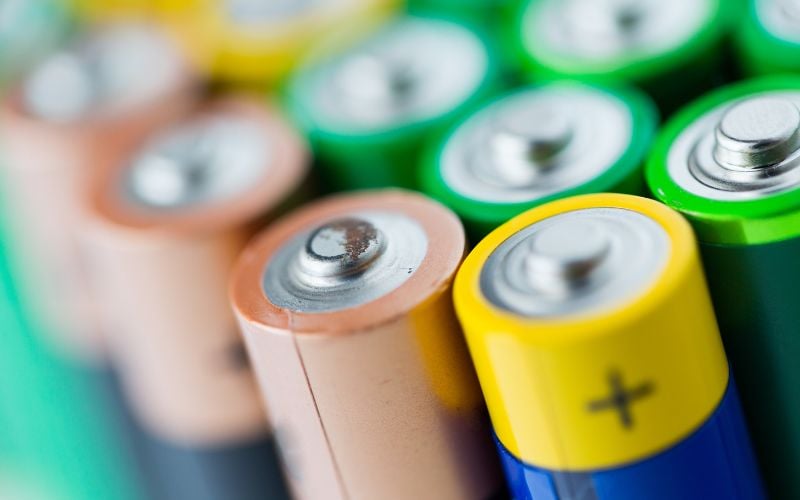
The next consideration in your quest for a UHF radio is battery life.
Many two-way radios, including VHF and UHF frequencies, use lithium-ion batteries. There’s a reason for that.
Lithium-ion batteries can sit for a while without any degradation in quality. They also affect memory less and have good energy density.
Some lithium-ion batteries can last for up to 14 hours at a clip but always do your homework before purchasing.
The general lifespan for lithium-ion radio batteries is between 18 and 24 months.
However, factors such as how often you charge the batteries, the charging methods used, how well you care for the batteries, and how often you use your UHF radio all affect the battery life span.
3. Location Tracking
This next factor is optional, as its usefulness depends on how you plan to use your UHF radio.
If you’re just in it for fun, this point doesn’t apply.
However, for those using UHF radio commercially, you should strongly consider a radio with location-tracking capabilities.
UHF radios that offer location tracking utilize GPS. You can use the radio among your fleet or a team to do more than communicate but find them if they’re lost or need help.
Emergency services can get to the team member fast thanks to location tracking.
Although a UHF radio with location tracking may be costlier, it’s beneficial for various reasons.
These radios often have good battery life and strong reception, and you can save your cell phone for other uses.
Location-tracking UHF radios are often durable due to their frequent usage in search and rescue operations.
That’s another benefit, as your radio will last for quite a while.
4. Radio Size
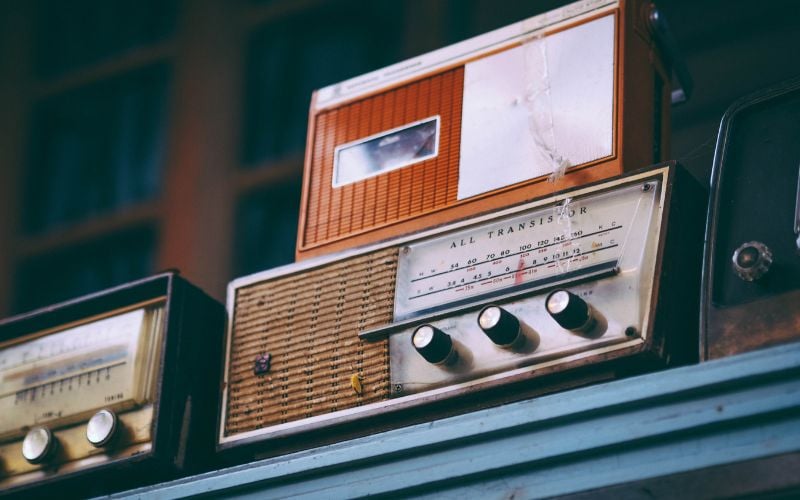
Consider the radio’s size as you narrow your search for UHF radios.
Just because a UHF radio is about the same size as a walkie-talkie doesn’t always mean these radios are as portable as you would assume.
It’s not so much the radio itself that drives up the size but the inclusion of necessary accessories like earpieces, microphones, and transceivers.
It doesn’t matter whether you’re using UHF radio for fun or commercial purposes. Either way, you must avoid a big, bulky radio dragging you down.
To save on space, look for UHF radios with built-in or compact mics and earpieces.
Compact transceivers, ideally handheld, will also make it easier and more convenient to transport your UHF radio wherever you need to take it.
5. Radio Weight
Going hand in hand with the size of your UHF radio is its weight.
Once again, the radio doesn’t weigh that much, usually between 10 and 13 ounces.
However, transceivers can be pretty weighty. Some weigh over 13 pounds without batteries.
When you add batteries, the weight can increase to almost 17 pounds.
These are considered portable transceivers. Nonportable transceivers can weigh even more.
The weight of your UHF radio might not matter to you quite as much if you’re going to keep it in one place.
However, if you’re interested in a portable radio, choose a model with a lightweight transceiver so you don’t break a sweat lugging it around.
6. Water Resistance

This is another factor that impacts you depending on how you use your UHF radio.
If you’re interested in prolonged outdoor operation, choose a radio with water resistance.
You won’t have to worry about your radio whether you get caught in a drizzle or snowfall.
That extra assurance may drive up the cost of the radio, but it’s worthwhile.
Water-resistant UHF radios have an IP rating indicating their effectiveness at keeping out moisture.
The radio should have a rating of IP68 or higher to offer at least eight hours of water protection.
7. Ease of Use
When shopping for electronics, ease of use must be a top concern.
That said, how experienced you are with UHF radios will go a long way toward how simply you transition into use.
Even if you have to take some time to learn the ropes, you should still be able to use your radio easily.
If the radio has too many buttons or switches or goes too heavy on the settings and you just don’t use most of them, you won’t find your UHF radio very useful.
As a result, it could collect dust in the back of a closet.
8. Durability
What can take a licking and keep on ticking?
UHF radios, at least some of them.
Military-standard radios will be the most durable.
These radios are tested for environmental stress, including humidity, pressure changes, temperature extremes, vibrations, and mechanical shocks.
You can rest assured that your UHF radio can withstand many conditions you may put it through.
A military-standard UHF radio will be more expensive than one that doesn’t meet that standard.
By the way, you don’t need a UHF radio for military applications to buy a military-standard radio. Even if you’re pursuing UHF radio as a hobby, you still deserve a high-quality product!
9. Encryption
Encryption is another of those nice-to-have features in UHF radios. Most hobbyists won’t need encryption, which keeps communications secure. Still, it is an option, so you might prioritize it when shopping.
10. Cost
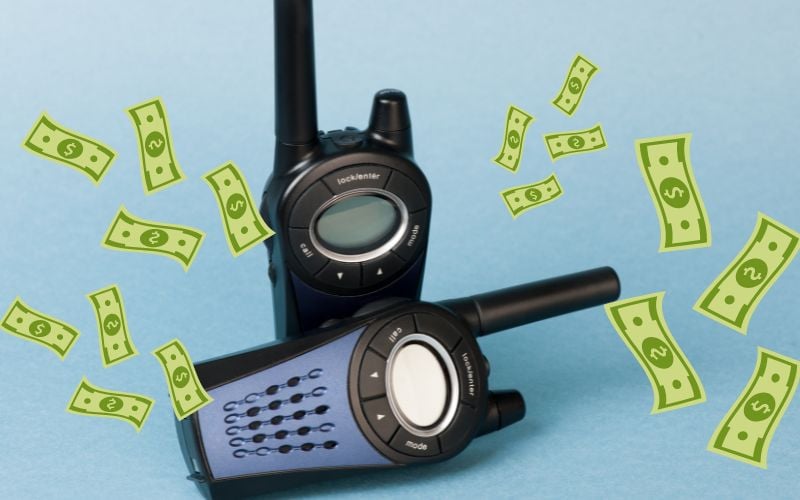
The last factor to consider when buying a UHF radio is its cost.
As we’ve gone over throughout this article, UHF radios come in all shapes and sizes with many features.
You only need some features depending on how you use your radio.
For example, while it’s always worth spending more on good radio quality, if you know you’ll use your UHF radio exclusively indoors, whether it’s waterproof is less critical.
Weigh the factors that are top priorities for you to determine what you need in a UHF radio, then shop for an appropriate model.
Be aware that consumer UHF radios tend to cost less than commercial models.
A consumer two-way radio is typically priced between $50 and $100, while a commercial UHF radio can cost $500 to $1,200 or more.
Where to Buy UHF Radios?
Now that you’ve got a good bunch of things to look for in UHF radios, where do you buy them anyway?
You guessed it! Amazon sells lots of them. Feel free to check out the most popular UHF radios that they have in stock here. We also make a small commission if you use these links. This helps support the blog and more content, so we appreciate it.
To check out the 5 bestselling UHF radios they have, check this out –
Wrapping Up
Buying a UHF radio requires consideration before you finalize a purchase, so you’re ultimately happy with the model you selected.
We hope the criteria we presented help you find an efficient UHF radio!